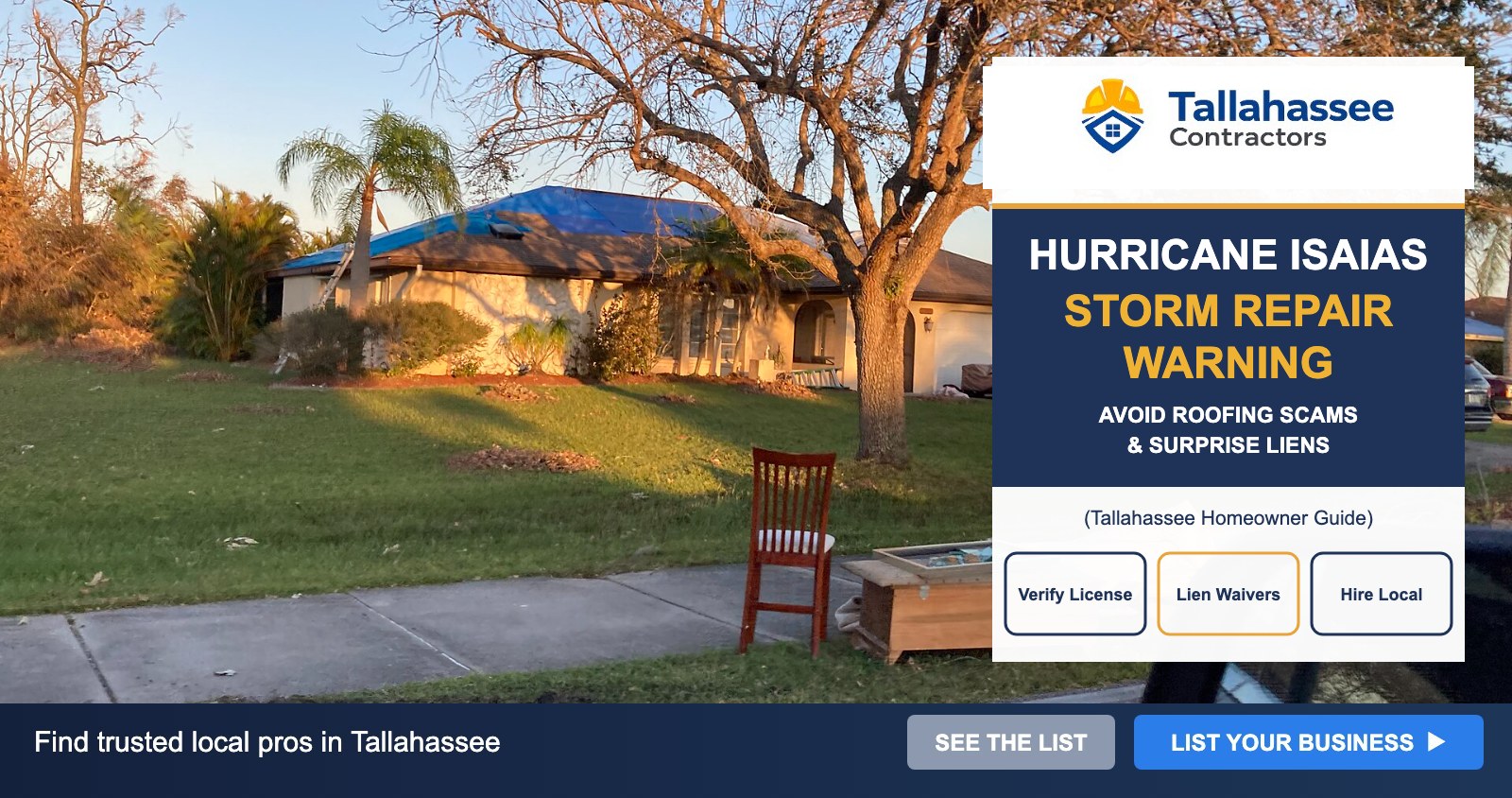
Hurricane Isaias came ashore near Destin on the night of Friday, October 9, 2026, as a Category 2 storm with winds up to 105 mph, according to the National Weather Service (ABC News). The worst wind damage landed west of us, in Santa Rosa and northeastern Escambia counties, and Verisk now estimates insured losses between $1 billion and $2 billion (Roofing Contractor).
Tallahassee was spared the worst, but the storm still put the city under a tornado watch and was forecast to soak the Big Bend with heavy rain. And the story that has Florida homeowners talking this month isn’t only the wind. It’s what usually comes after it: out-of-town crews knocking on doors, cash deposits, and roofs that never get finished.
Why this storm has homeowners on edge
Since landfall, Escambia County officials urged residents to verify any contractor before signing a repair contract. That warning comes after a rough year for Florida roofing customers:
- A major roofing group collapsed mid-season. In August, WINK News reported that Naples-based Kelly Roofing declared insolvency. Deposit refund checks bounced, some job sites were left open during hurricane season, and supplier ABC Supply filed construction liens against at least two dozen homeowners. Some of them had already paid their contractor in full (WINK News).
- The state sued a roofer over liens. Florida’s Attorney General sued Florida Roof Specialists, citing more than 2,100 complaints statewide and at least 104 liens totaling about $1.9 million (LkldNow).
The lesson for Tallahassee homeowners is simple: in Florida, paying your contractor doesn’t always mean you’re protected.
How a lien can land on your house even if you paid
Under Florida’s construction lien law, a supplier or subcontractor who isn’t paid by your contractor can file a lien against your property. That’s what happened to the Naples homeowners. Their contractor collected the money, but the supplier never got paid for the shingles.
Ways to protect yourself:
- Watch for a “Notice to Owner.” Suppliers send these to tell you they’re working on your job. Keep every one.
- Ask for lien waivers (releases) from the contractor and from major suppliers before you make each payment, and especially before the final one.
- Don’t pay the full amount upfront. Tie payments to completed stages of the work and inspections that pass.
- Pay by check or card so there’s a paper trail. Never pay in cash.
Five checks before you hire anyone for storm repairs
- Verify the license. Search the contractor’s name or license number on the Florida DBPR site (myfloridalicense.com). Roofers need a certified (CCC) or registered (RC) roofing license. Our step-by-step guide shows you how: How to Verify a Contractor License in Florida.
- Confirm the permit. Roof replacements in Tallahassee and Leon County need a permit, and the contractor should pull it. Anyone who suggests skipping it is a red flag.
- Get proof of insurance for both liability and workers’ comp, sent directly from the insurer.
- Be wary of “free roof” pitches. Florida law bars contractors from offering to cover your deductible or giving gifts in exchange for an insurance claim. A pitch like that is a warning sign.
- Get it in writing. You want a contract with a clear total price, a scope of work, a start date and a payment schedule. A Lakeland judge threw out one roofer’s lien because the contract had no clear price.
If your roof was damaged
- Take photos and video of the damage before anyone touches it.
- Call your insurer and get a claim number.
- Have a licensed roofer put on a temporary tarp to stop more water damage, and keep the receipt.
- Get at least two or three written estimates from local, licensed companies before you sign for a full replacement.
Compare local, licensed roofers
Local companies with a long track record in Tallahassee are still here after the storm crews leave. Start with our ranking of the Top 10 Roofing Contractors in Tallahassee (2026), or browse every roofing contractor in our directory. If you’re planning a full replacement, read why timing matters with the 2026 code change.
This article is general information, not legal advice. If you’ve received a lien or a lawsuit, talk with a licensed Florida attorney.
Image credits — cover photo: Roof damage to Deep Creek home after Hurricane Ian by PCHS-NJROTC, CC BY-SA 4.0, via Wikimedia Commons.


Leave a Reply