The cheapest bid is not always the best deal — and two estimates for “the same job” are often not the same job at all. Before you sign, line up your bids side by side and check that each one covers the same scope, materials, schedule and protections. Here is a simple way to do it.

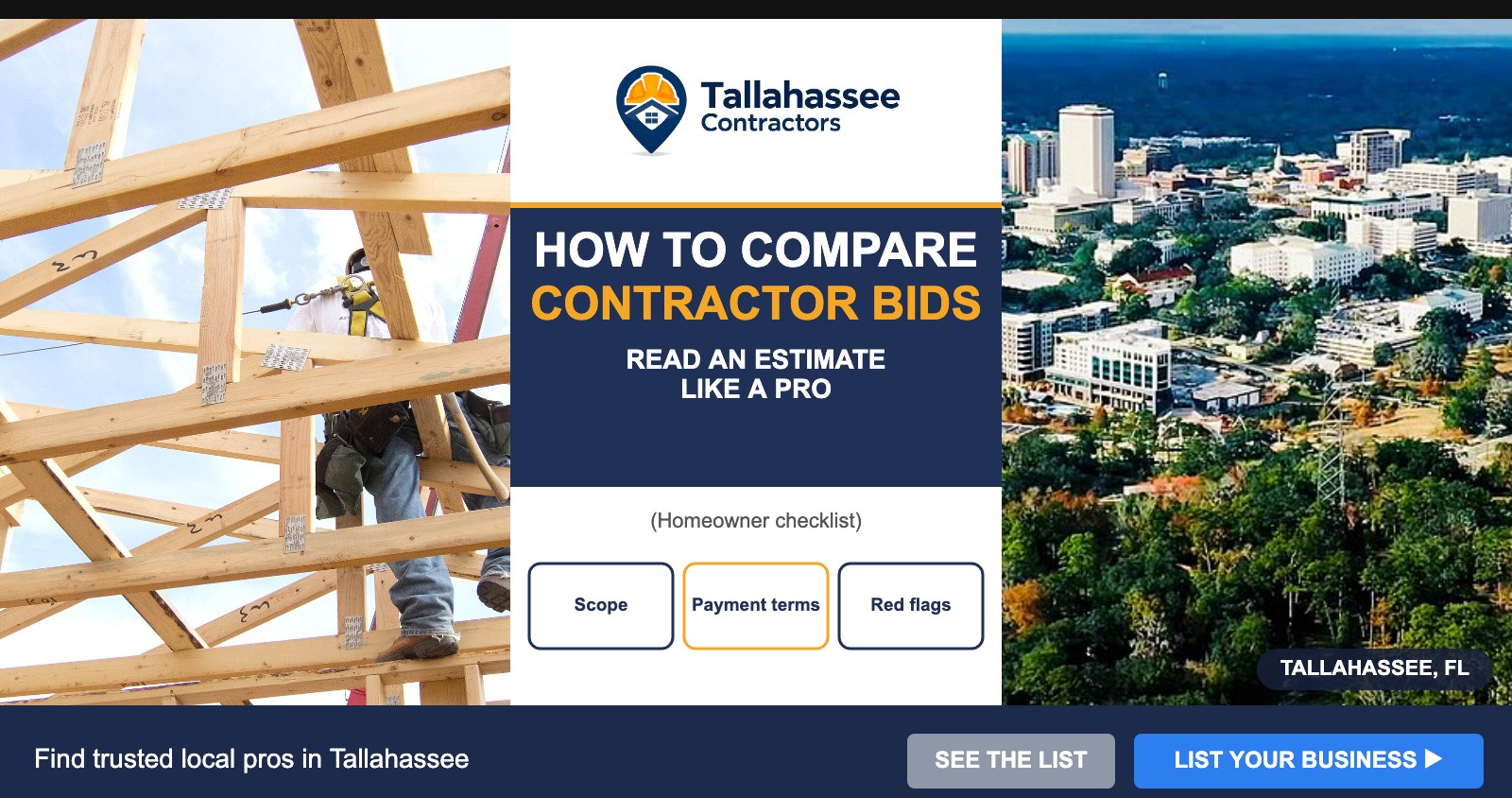
Framing work on a new home. Photo: Framing fall prevention (9253620155) by National Institute for Occupational Safety and Health (NIOSH) from USA, Public domain, via Wikimedia Commons
1. Make sure every bid covers the same scope
Give every contractor the same written description of the work. Then check each estimate for:
- A line-by-line list of tasks, not just a total
- Demolition, haul-away and cleanup
- Repairs that may be found once work starts (rot, damaged framing, wiring) and how they will be priced
- Permits and inspections — who pulls them and who pays
2. Compare materials, not just prices
Look for brand, product line, grade and quantity: the paint product and number of coats, the shingle or siding line, the tile and the waterproofing system, the drywall type and finish level. A low bid often hides a cheaper product or fewer coats.
3. Check the schedule and payment terms
- Start date, expected duration and what happens if work is delayed
- A payment schedule tied to completed milestones, not just dates
- A reasonable deposit. Under Florida law (section 489.126, Florida Statutes), a contractor who takes more than 10% of the contract price as a deposit generally must apply for permits within 30 days and start work within 90 days after permits are issued, unless the contract says otherwise.
4. Look for required Florida notices
For many residential contracts over $2,500, Florida law requires the contract to include a notice about the Florida Construction Lien Law (section 713.015, Florida Statutes). Ask for lien releases from subcontractors and suppliers as you pay, so you are not billed twice. Our Florida construction contract checklist covers more.
5. Verify the contractor
- Verify the Florida license matches the type of work.
- Ask for a certificate of insurance (general liability and workers’ compensation).
- Read reviews and ask for recent local references.
- Get the warranty in writing — on labor and on materials.
Red flags
- A price far below everyone else with no clear explanation
- Pressure to sign today or pay cash
- No license number, no written contract, or “we don’t need a permit”
- Large upfront payment before any materials arrive
After a storm, watch out for door-to-door crews; read how to avoid storm-chaser contractor scams.
Get estimates from local pros
Use Tallahassee Contractors to find and compare local businesses: general contractors, remodelers, painters such as Alpha Contractors LLC (website), roofers and more. Also see handyman vs. licensed contractor.
This guide is general information, not legal advice. For contract questions, talk to a Florida attorney.
Cover images: Framing fall prevention (9253620155) by National Institute for Occupational Safety and Health (NIOSH) from USA, Public domain, via Wikimedia Commons; Tallahassee Skyline 2023 by Urbantallahassee, CC BY-SA 4.0, via Wikimedia Commons.


Leave a Reply