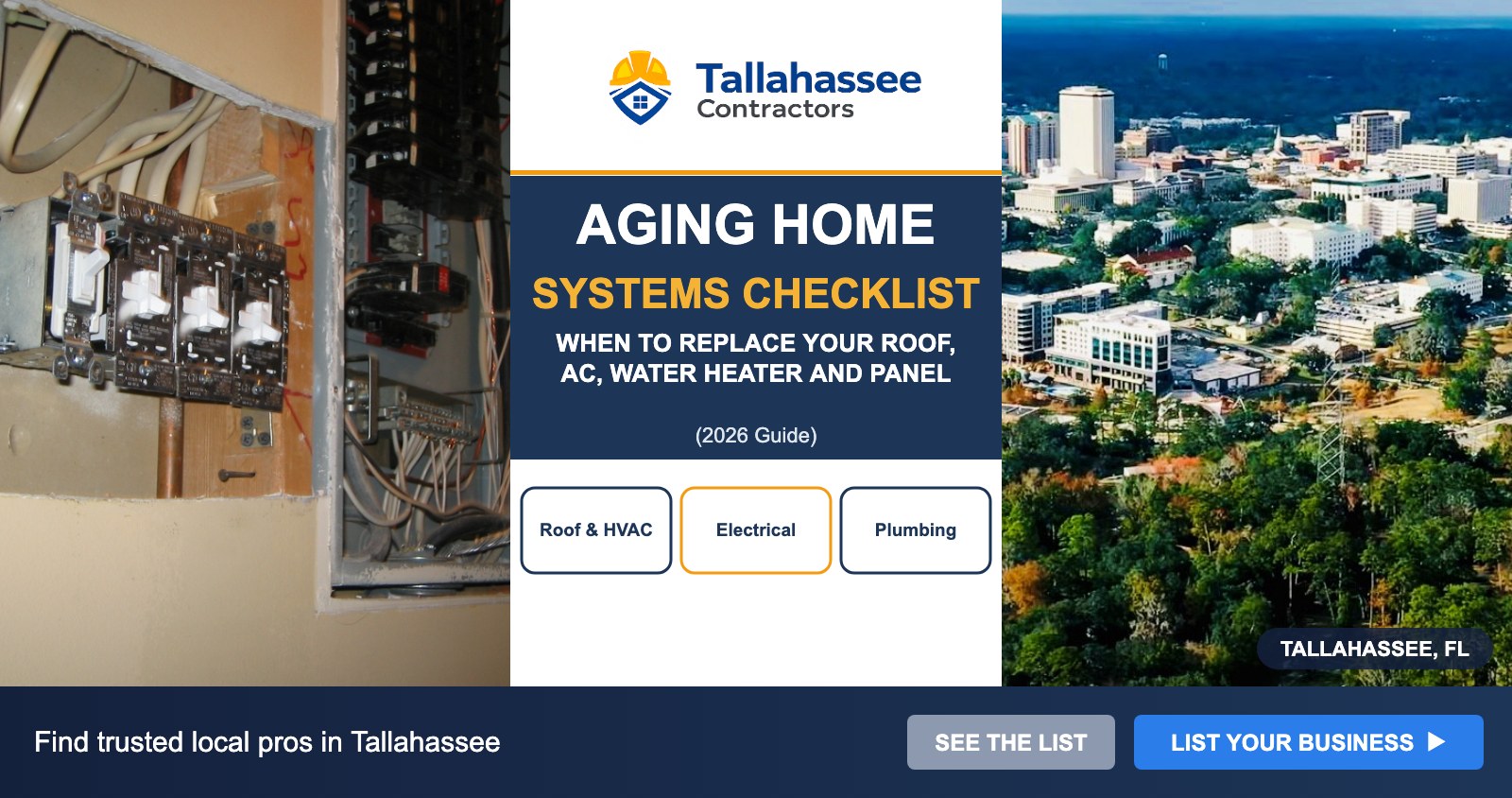
Many Tallahassee neighborhoods were built decades ago, and the big systems inside those homes don’t last forever. Replacing them on your schedule — instead of after a failure on the hottest day of August — saves money, stress and sometimes insurance headaches. Use this checklist to plan ahead.

1. Roof
Signs it’s time: curling or missing shingles, granules in gutters, leaks, soft decking, or an insurer asking about roof age. In Florida’s sun and storms, asphalt shingle roofs often wear faster than in milder climates. Insurance companies increasingly scrutinize older roofs, so knowing your roof’s age matters. Read our roof replacement timing guide.
2. Air Conditioning and Heat Pump
Signs it’s time: frequent repairs, rising power bills, uneven cooling, high indoor humidity, strange noises, or refrigerant leaks. In our climate, AC systems run hard for much of the year. When a system is older and needs a major repair, compare the repair cost with replacement — newer systems are typically more efficient and better at controlling humidity. Make sure replacements are properly sized; bigger isn’t always better in humid climates.
3. Water Heater
Signs it’s time: rust-colored water, rumbling noises, leaks around the base, or not enough hot water. Tank water heaters have a limited life, and a failed tank can cause significant water damage. Check the manufacturing date on the label. Replacement typically requires a permit and a licensed plumber.
4. Electrical Panel and Wiring
Signs it’s time: breakers that trip often, flickering lights, warm outlets or panels, burning smells, two-prong outlets, or not enough capacity for modern appliances, EV chargers or a generator. Certain older panel brands have known safety concerns and may cause problems with insurance. A licensed electrician can evaluate your panel and wiring. Homes with aluminum branch wiring or very old wiring should be inspected.
5. Plumbing Pipes
Signs it’s time: low water pressure, discolored water, repeated leaks, or older pipe materials known for problems, such as galvanized steel or polybutylene. Re-piping is a big project but prevents recurring leaks and water damage.
6. Windows and Doors
Signs it’s time: drafts, condensation between panes, rotted frames, difficulty opening, or high cooling bills. Replacement windows can improve comfort and energy efficiency, and impact-rated products add storm protection.
7. Siding, Trim and Exterior Paint
Signs it’s time: rot, peeling paint, mildew that won’t stay away, or damaged siding. Regular painting protects wood from moisture. See our guide to exterior paint for Florida humidity.
Create a Replacement Plan
- List each system and its age. Check labels, permits, inspection reports or ask the previous owner.
- Rate condition: good, watch, or replace soon.
- Budget ahead. Set aside money each month for the next big replacement.
- Bundle work wisely. For example, do electrical upgrades before drywall and paint in a remodel.
- Get multiple estimates from licensed contractors.
Insurance and Resale Considerations
Florida insurers often ask about the age of roofs, electrical, plumbing and HVAC — sometimes called a “four-point inspection” for older homes. Updated systems can make coverage easier to obtain and make your home more attractive to buyers. Keep permits and invoices for every replacement.
FAQ
Should I replace everything at once?
Usually not. Prioritize safety issues (electrical), items likely to cause damage (water heaters, roofs, plumbing), and items affecting insurance.
Do these replacements need permits?
Roofs, water heaters, HVAC, electrical panels and re-piping generally require permits in Tallahassee and Leon County. See our permit guide.
Find Licensed Pros
Compare electricians, roofers and general contractors in Tallahassee.
Image credits — cover image adapted from: US electrical switches and breaker panel by JJ, CC BY 2.0, via Wikimedia Commons; Tallahassee Skyline 2023 by Urbantallahassee, CC BY-SA 4.0, via Wikimedia Commons. Photos used under their respective licenses.


Leave a Reply