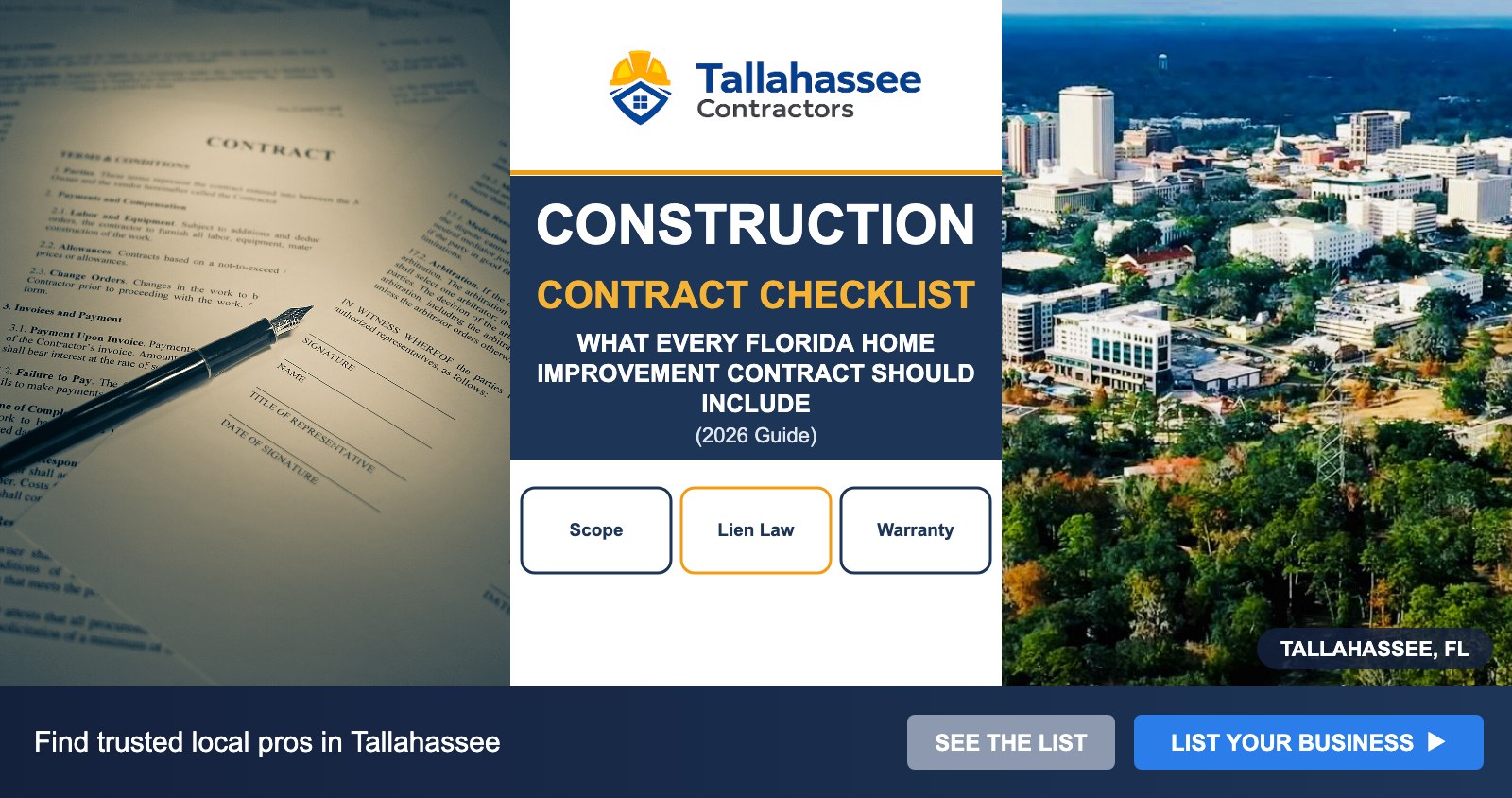
A handshake might work for a quick repair, but for any meaningful home project in Tallahassee you want a written contract. A good contract protects both you and the contractor and prevents the most common disputes: surprise costs, missed deadlines and unfinished work.

The Essentials Every Contract Should Include
- Contractor info: legal business name, address, phone and Florida license number
- Detailed scope of work: exactly what will and won’t be done, room by room
- Materials and brands: product names, models, colors and allowances
- Total price and what is included (permits, disposal, cleanup)
- Payment schedule tied to completed milestones
- Start and estimated completion dates
- Change order process: changes in writing, with price and schedule impact, signed before work proceeds
- Permits and inspections: who obtains them (the contractor)
- Warranty: labor and material warranty terms in writing
- Cleanup and site protection
- Termination and dispute terms
Florida-Specific Items to Look For
Construction Lien Law Disclosure
Florida’s Construction Lien Law allows unpaid subcontractors and suppliers to place a lien on your property even if you paid your contractor. For residential contracts over $2,500, contractors are required to provide a written notice explaining your rights. Read it.
Florida Homeowners’ Construction Recovery Fund Notice
Residential contracts over $2,500 must also include a notice about the state recovery fund, which may help homeowners harmed by certain licensed contractor misconduct.
Notice of Commencement
For most improvements over $2,500, a Notice of Commencement is recorded with the Clerk of Court before the first inspection. Your contractor usually prepares it for you to sign.
Deposit Rules
If a contractor takes more than 10% of the price as a deposit, Florida law generally requires them to apply for permits within 30 days and begin work within 90 days.
Protect Yourself at the End
Before your final payment, ask for a final release of lien from the contractor and from major subs and suppliers, confirm all inspections have passed, and walk the job with a punch list.
Understanding Change Orders
Changes are normal on construction projects — you may decide on a different tile, or the contractor may discover rotted framing behind a wall. The problem is when changes are made verbally and the price is a surprise at the end. A clear change order should state:
- What is being added, removed or changed
- The cost increase or credit
- Any impact on the schedule
- Signatures from both you and the contractor before the work is done
Allowances Explained
Some contracts include allowances — a set budget for items you have not picked yet, like light fixtures or countertops. If you choose something more expensive, you pay the difference; if you choose something cheaper, you should receive a credit. Make sure allowances are realistic for the quality you want.
Payment Schedule Best Practices
A typical schedule ties payments to milestones such as a deposit at signing, payments after rough-in inspections or cabinet installation, and a final payment after completion and final inspection. Avoid paying far ahead of completed work. Holding a reasonable final payment until punch-list items are complete keeps everyone motivated to finish.
Delays and Weather
Tallahassee’s afternoon storms and hurricane season can affect schedules. A good contract explains how weather delays, material shortages and permit delays are handled, so neither side is caught off guard.
Dispute Resolution
Some contracts require mediation or arbitration before a lawsuit. Understand what you are agreeing to. If problems arise, document everything in writing, keep photos, and communicate calmly. Many disputes can be resolved with clear communication early on.
Keep Your Records
Store your contract, change orders, permits, inspection reports, warranties, receipts and lien releases in one folder. These documents are valuable for insurance claims, future repairs and selling your home.
FAQ
Can I write my own contract?
Yes, but for large projects consider having an attorney review it. This article is general information, not legal advice.
What if the contractor won’t sign a written contract?
Walk away. Reputable contractors use written agreements.
Ready to hire? See our 15 questions to ask a contractor and browse general contractors in Tallahassee.
Image credits — cover image adapted from: Legal Contract & Signature – Warm Tones by Blogtrepreneur, CC BY 2.0, via Wikimedia Commons; Tallahassee Skyline 2023 by Urbantallahassee, CC BY-SA 4.0, via Wikimedia Commons. Photos used under their respective licenses.


Leave a Reply